
The 2025 State of AI-assisted Software Development report confirms a reality many of us in the field have been sensing for months:
AI is not a shortcut. It is a magnifier.
It makes good teams great.
And bad teams worse, faster.
This article is my analysis of the report through the lens of an Agile practitioner.
I need to mention that this year's report is too lengthy and more explanatory.
1. What AI Is Actually Doing Inside Teams (It’s Not What You Think)
The report shows that 90% of developers now use AI daily.
Autocomplete, chat-based problem solving, code suggestions - all deeply embedded.
But here’s the surprising part:
Most organizations aren’t seeing dramatic end-to-end improvements.
Why?
Because AI helps you go faster, not necessarily in the right direction.
Teams with weak processes, unclear priorities, or legacy architectures simply ship low-quality work… only faster.
In Agile terms:
- AI improves velocity
- It does nothing for value unless your system is healthy
This is why the report repeatedly warns:
Speed without stability is just accelerated chaos.
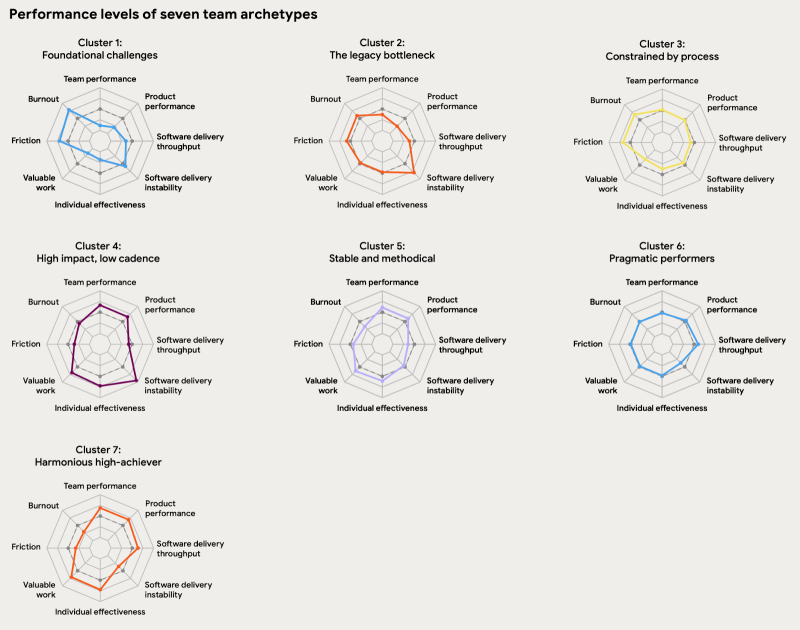
2. The 7 Team Profiles: Where Most Teams Actually Stand
DORA’s 2025 update introduces seven maturity team profiles as follows:
1. Foundational Challenges
Nothing works well. High pressure. Slow delivery.
Teams here don’t need AI - they need a reset.
2. Legacy Bottleneck
You’re smart people trapped in old systems.
Everything takes too long. AI can help, but slowly.
3. Process-Constrained
You know exactly what to do… but approvals, policies, and meetings kill all momentum.
4. High-Impact, Low-Cadence
Brilliant output, slow delivery. Usually understaffed or over-specialized.
5. Stable and Methodical
Quality-first teams. Calm, reliable… sometimes too slow for modern product demands.
6. Pragmatic Performers
A healthy balance of speed and stability.
If these teams adopt AI well, they climb to the top tier.
7. Harmonious High Achievers
The holy grail.
Low stress, high stability, fast delivery, and excellent culture.
Almost 40% of teams fall into groups 6 and 7, which means the “AI revolution” is not reserved for the elite - it’s reachable.
3. AI Success Is Not About Tools - It’s About System Design
DORA’s new AI Capabilities Model confirms what many of us have been preaching in Agile environments:
AI is just one part of a much larger ecosystem.
High-performing teams share seven traits:
✔ Clear AI strategy and policies
People know when and how to use AI safely.
✔ High-quality internal platforms
The developer experience is smooth.
Tooling doesn’t get in your way.
✔ Clean, accessible data
AI without good data is pointless.
✔ Strong focus on DevEx (developer experience)
Developers actually enjoy the workflow - a massively underrated success factor.
✔ Culture of learning
Teams experiment instead of fearing mistakes.
✔ Modular, decoupled architecture
It doesn’t matter how smart your AI is if you deploy it into a monolith made in 2007.
✔ User-centric thinking
Delivery only matters when it solves a real problem.
This model should be required reading for CTOs.
4. The Paradox of AI: More Speed, More Instability
One of the boldest findings in the report is this:
AI increases throughput. It also increases instability.
Meaning:
- You deliver more
- But you also break more
Agile Coaches have warned about this pattern for years:
When you increase speed without investing in quality, bottlenecks simply shift downstream.
The fix?
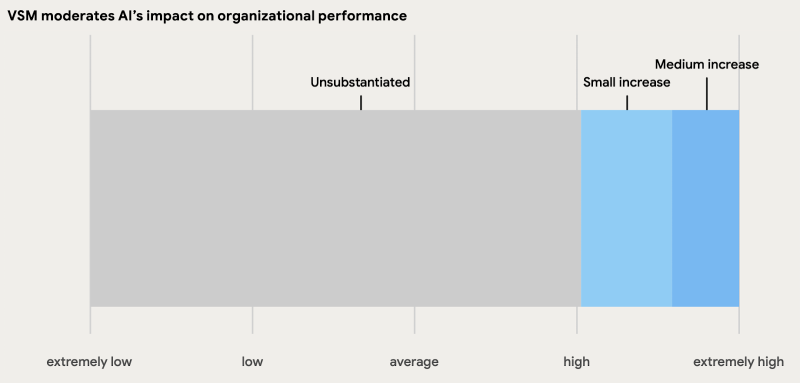
Invest in platform engineering, quality engineering, and Value Stream Management (VSM).
These areas are no longer “nice to have.” They’re the backbone of AI-enabled teams.
5. What Developers Are Actually Using AI For
The adoption patterns are telling:
Most common use cases
- Writing new code
- Modifying existing code
- Debugging
- Explaining code
- Generating tests
Less common
- Requirements analysis
- Documentation
- Planning work
- Architecture insights
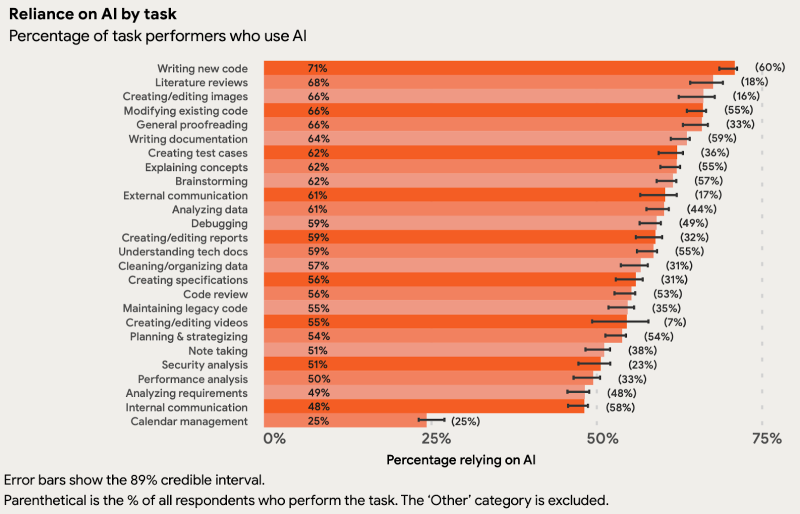
This means AI is still primarily seen as a coding assistant, not a thinking partner.
That will change - but only when teams learn how to trust and verify AI outputs.
6. Quality: The Elephant in the Room
Here’s the stat everyone wants to quote:
59% of teams say code quality has improved with AI.
But the devil is in the details:
- 10% say quality got worse
- 30% say they’re unsure or don’t fully trust AI output
In my experience, AI produces beautifully formatted, confidently written, subtly incorrect code.
Which brings us to the most important part of all:
👉 AI doesn’t replace code review. It makes code review more critical.
7. A Message to Engineering Leaders: Choose Intentional Adoption
If you’re responsible for people and delivery, here’s my advice distilled to one sentence:
AI adoption should be intentional, systematic, and deeply tied to your operating model - never rushed.
The organizations winning with AI share three patterns:
1. They fix the system first.
Stable pipelines, clean architecture, solid product discovery.
2. They adopt AI gradually with feedback loops.
Start small. Measure everything. Adjust.
3. They invest heavily in people.
Training, pair programming, new workflows, and psychological safety.
Teams that skip these steps eventually drown in AI-generated complexity.
Conclusion: AI Is Redefining Software - But Only for Those Who Are Ready
The 2025 State of AI-assisted Software Development Report is not about tools.
It’s about Team Health, Culture, Architecture, and Clarity of Purpose.
AI is a force multiplier.
It amplifies whatever you already are.
- Strong teams become unstoppable.
- Weak systems crack under the pressure.
- Leaders who prepare their foundations will thrive.
- Those who treat AI as a shortcut will create faster bugs and deeper chaos.
This is not a technological revolution.
This is an organizational one.
And the teams who understand that - the teams who invest in sustainable agility, platform engineering, and people-first culture - are the ones who will shape the next decade of software development.