
You know that Scrum is founded on empiricism. It means that, as you don't know everything in advance in a complex project, you should be open to changing your direction as you learn more along the way.

Empiricism is the use of past facts and evidence for upcoming decision-making.
Let me give you an example.
Driving your car
Imagine trying to drive your car strictly based on a Gantt chart and upfront planning. It would assure you that if you follow the plan exactly, you’ll reach your destination on time.
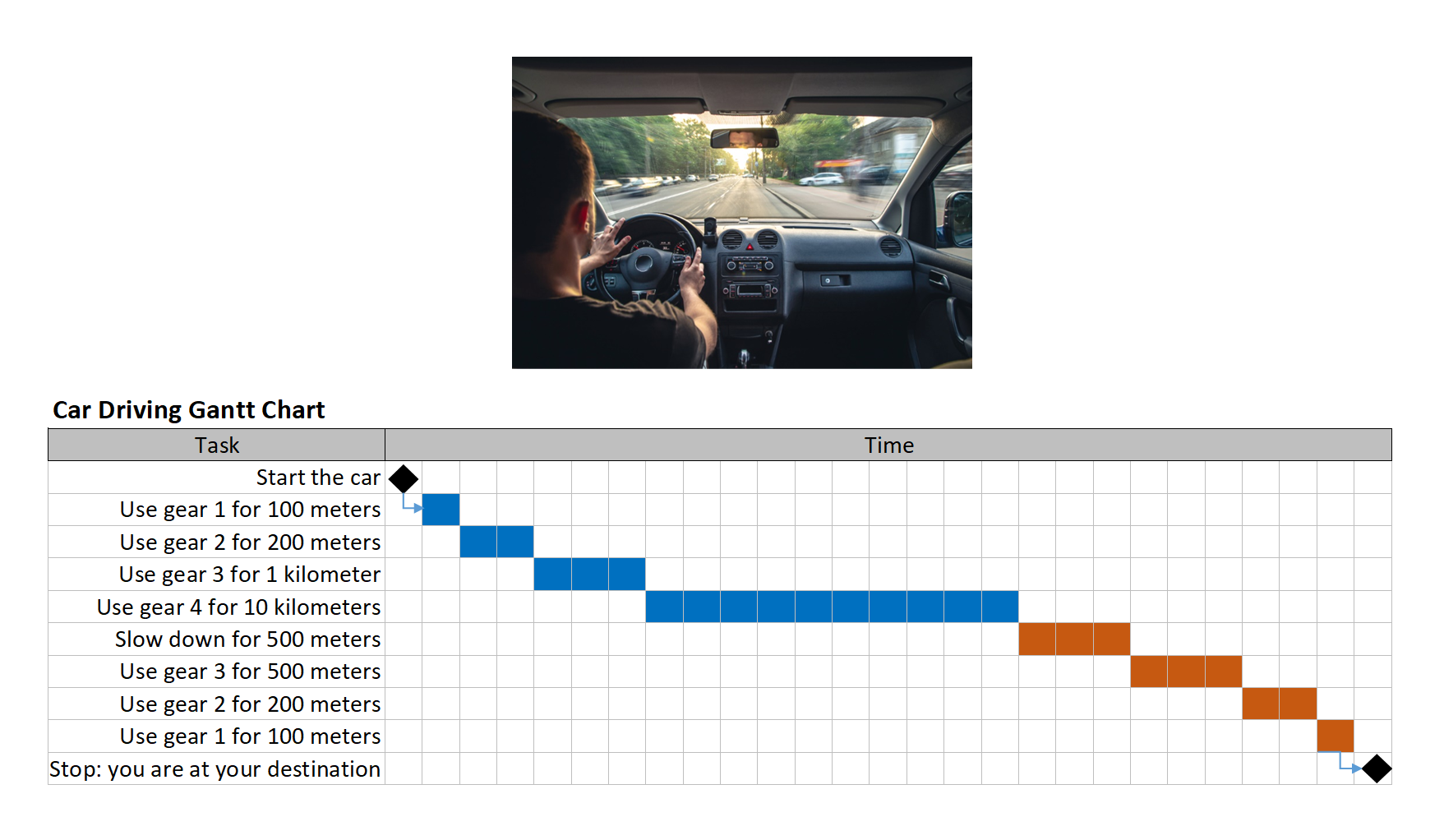
But what happens when you encounter the realities of the road? Pedestrians, other vehicles, cyclists, traffic lights, and emergency vehicles—none of these variables can be fully predicted in advance. Rigidly sticking to such a plan would likely lead to mistakes, delays, or even accidents.
Instead, driving is based on an adaptive approach: seeing the surroundings transparently through the car’s windows, frequently inspecting the environment, and adapting as needed. You adjust speed, brake, or change course to respond to the ever-changing conditions of the road. This dynamic process is how drivers navigate uncertainties safely and effectively.
Scrum applies the same approach to manage uncertainties in product development. By promoting transparency, regular inspection, and timely adaptation, Scrum ensures teams respond to challenges dynamically, making informed decisions in real time.
-------------------------------------------------------------------
Do you plan to become a Scrum Master?
Then, you don't want to miss my Job Switch PSM Package.
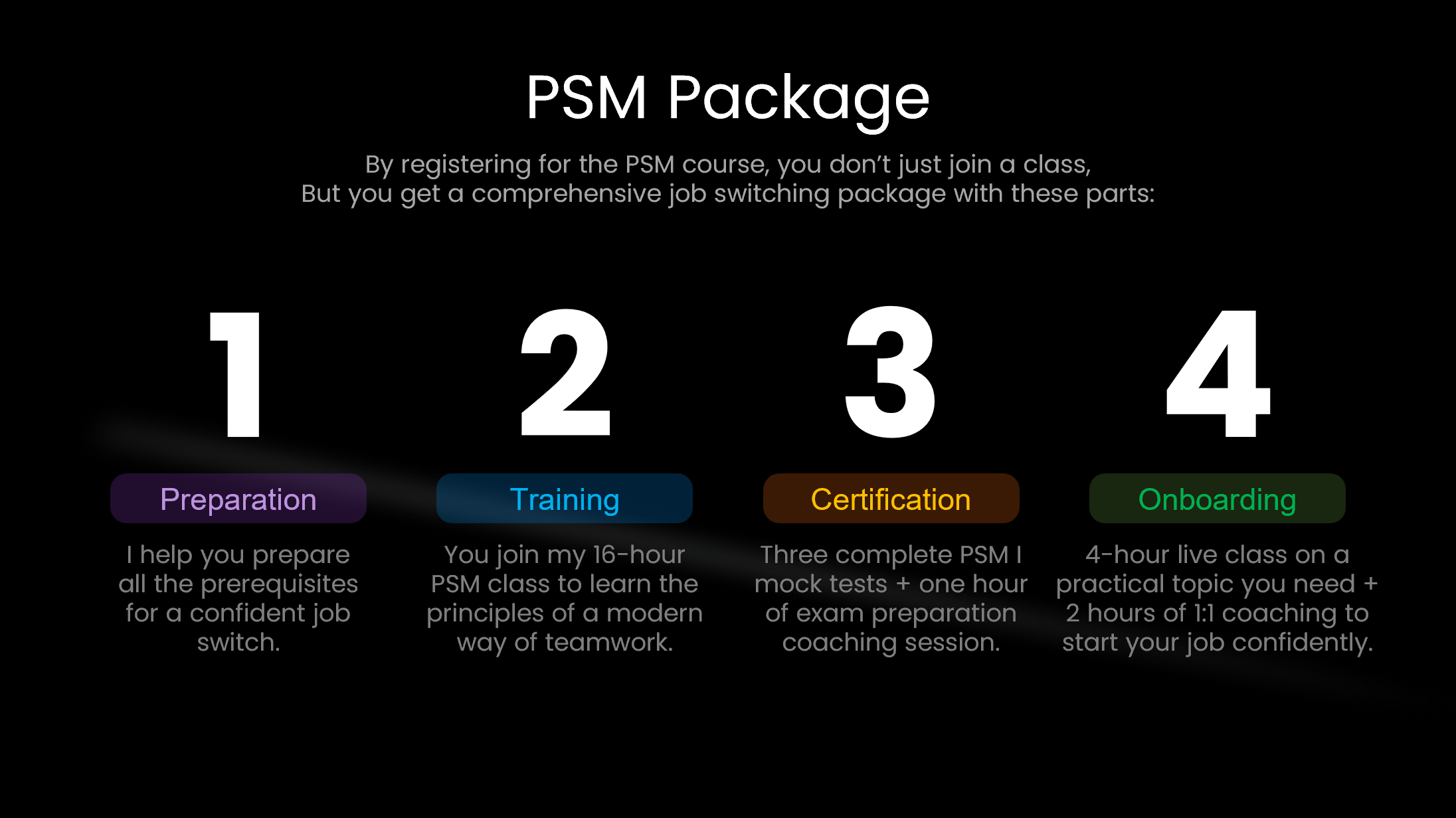
I am the only Professional Scrum Trainer (PST) in Europe who exclusively serves IT Professionals seeking an internal job switch within their current company to become a Scrum Master or start using Scrum.
Instead of just giving you a training and leaving, I walk with you step by step throughout your entire career transition. This includes four steps of job switch preparation, PSM training class, earning your PSM I certification, and successful onboarding into your new position.
By registering for my Professional Scrum Master (PSM) class, you will get my Job Switch PSM Package. Click here to get more information about the class and package.