
In my previous article on the Cost of Delay discipline, I argued that 85% of product managers cannot answer the one economic question that matters most. What does it cost us if this ships a month late? I closed with a line several readers wrote back about. Price your time. Everything else is a negotiation about opinions.
The follow-up question was uncomfortable. They knew the discipline. They had read Reinertsen. They still did not do it. Why?
The answer is not laziness or missing training. It is biology operating inside organizations that punish the conditions biology needs. David Rock's "Your Brain at Work" is the operating manual Reinertsen's discipline requires [1].
The One to Two Hour Brain
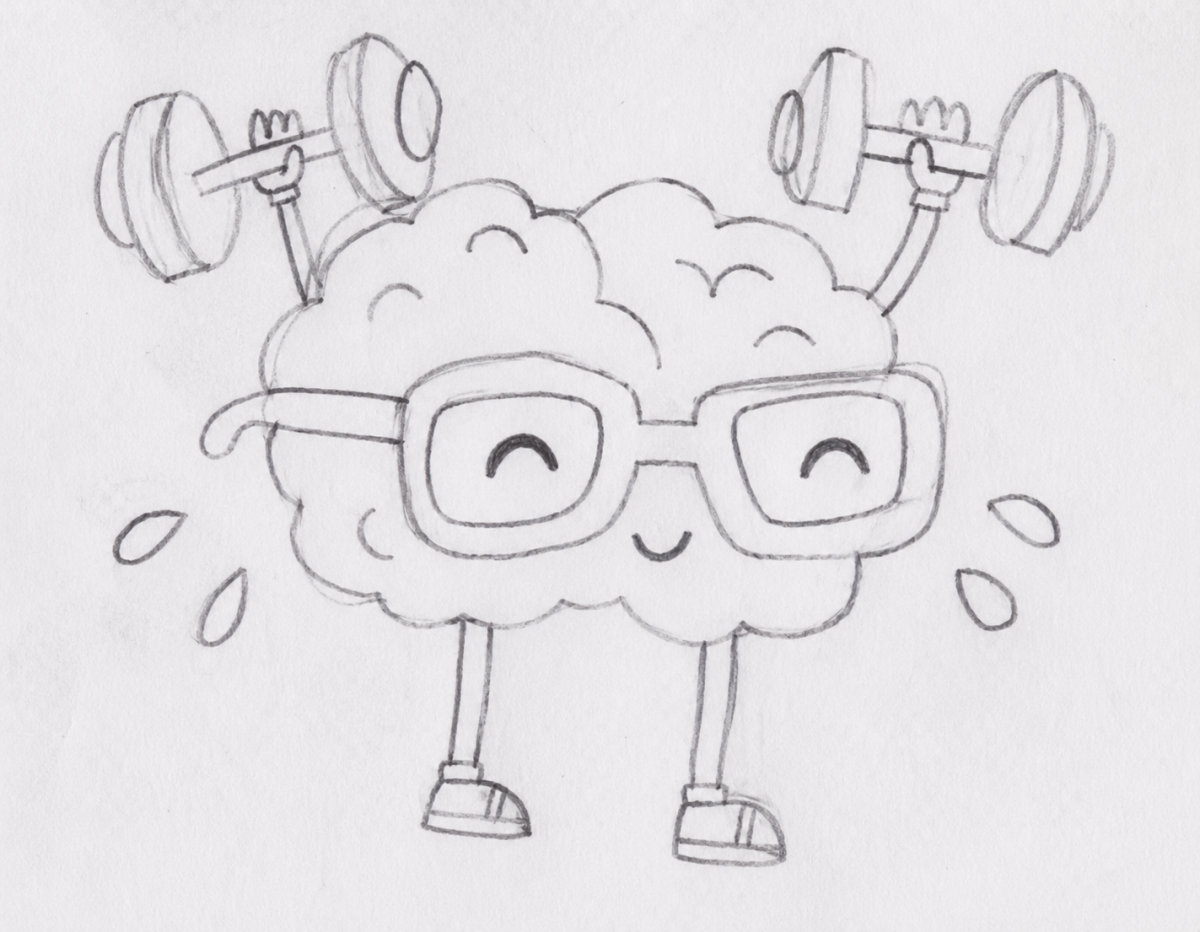
Rock's central finding lands hard. The prefrontal cortex, the part of the brain responsible for economic reasoning and trade-off thinking, sustains roughly one to two hours of focused, high-quality work per day [1]. Not eight. Not four. One to two.
The prefrontal cortex is also the most energy-hungry region of the brain. Rock describes it as a small, brightly lit stage where only a few items can stand at a time. Push a fifth concept on and one of the existing four falls off. Holding multiple economic variables in mind, weekly revenue, time horizon, dependency unlocks, opportunity cost, is exactly the workload that depletes the stage fastest.
Most product leaders burn that capacity before lunch. Stand-ups, status updates, Slack triage, calendar Tetris, all of it consumes prefrontal glucose. Amy Brann's October 2025 Harvard Business Review piece makes the same point in modern leadership context [2]. Senior decision-makers arrive at their highest-value analytical task with a drained battery.
This is the mechanism behind what I called the Time Poverty Paradox. Product leaders are not failing to find an afternoon. They are arriving at it already spent.
SCARF and the Threat of a Number
Rock's second contribution is the SCARF model [3]. Five social drivers register in the brain as primary rewards or threats: Status, Certainty, Autonomy, Relatedness, and Fairness. A perceived threat to any of them activates the same neural circuitry that responds to physical danger. The prefrontal cortex goes offline. Defensive thinking takes over.
Now consider what happens when a product manager commits to a specific Cost of Delay number in front of stakeholders. Status is on the line because the number might be wrong, publicly. Certainty collapses, since the number is by definition a quantification of uncertainty. Autonomy gets contested, because defending the number means pushing back on louder voices. Fairness comes under pressure, since someone's pet project loses sequencing priority. Four of five SCARF dimensions triggered by a single act.
The brain reads this as a threat event. Story points feel safer because they trigger almost none of those threats. Vague enough to protect status, hide uncertainty, preserve autonomy through ambiguity, keep stakeholder relationships intact.
The model itself has evolved. NeuroLeadership Institute's 2025 review of more than 15,000 respondents found that Fairness and Autonomy have replaced Certainty and Relatedness as the top two drivers in modern workplaces [4]. Fairness and autonomy threats are exactly what Cost of Delay quantification triggers. Teams retreat to story points because the brain is doing its job. Protecting itself.
Decision Fatigue Compounds the Damage
The prefrontal cortex runs on glucose. Every decision draws from a finite daily budget. Roy Baumeister's ego depletion research and the well-known parole judge study, where favorable rulings dropped from 65% in the morning to nearly zero just before lunch, established the pattern decades ago [5]. Decisions made late in the depletion cycle are worse decisions, almost regardless of expertise.
Picture a typical backlog refinement meeting. It runs 90 minutes. Cost of Delay, if it gets discussed at all, lands in the final 15. The prefrontal cortex of every person in the room is empty. The analysis that requires the most cognitive horsepower receives the least. Wrong sequencing is not a process failure. It is a near guarantee of physiology.
This connects to the decision debt argument I made earlier this year. Organizations accumulate complexity through thousands of decisions made under depletion. The cumulative system is unreasonable because the moments themselves were cognitively compromised.
AI Is Not Yet the Relief Valve
A reasonable hope is that AI offloads the cognitive burden, freeing the prefrontal cortex for higher-order economic thinking. The early evidence runs the other way. Bedard, Kropp, Hsu, and colleagues published research in Harvard Business Review in March 2026 showing that high-immersion AI use intensifies cognitive strain rather than reducing it [6]. Evaluating model output, prompting iteratively, and integrating AI suggestions often consumes more prefrontal capacity than doing the work directly. For Cost of Delay, AI can pull data and draft a worksheet. The economic judgment still falls to a human brain that is now also managing the AI.
What Changes When You Design for the Brain
Three concrete moves shift the conditions under which the discipline can actually take hold.
The first is sequencing. Block prefrontal time for economic reasoning early in the day, before the meeting cascade begins. Treat it the way an athlete treats a workout. A standing 8:30 to 9:30 slot for Cost of Delay analysis on the next two backlog items, before the day's first stand-up, will produce more rigorous numbers than any afternoon workshop.
The second is reducing SCARF threat around quantification. A Product Operating Model that punishes wrong estimates kills the discipline before it starts. Make "precisely wrong" higher status than "vaguely right." Reward the act of producing a number, not its accuracy. When the first Cost of Delay estimate proves off by 40%, the response should be calibration, not blame.
The third move is externalizing working memory. The brain cannot hold five economic variables on the stage simultaneously. A worksheet can. A one-page Cost of Delay template, with weekly revenue, time horizon, dependency unlocks, decay rate, and risk discount as named fields, removes the load from the prefrontal cortex. The brain stops juggling and starts reasoning.
The Operating Manual
Last week I said price your time. The addition this week is simple. The brain can only do that under specific conditions, and most organizations destroy them by 10am.
Reinertsen gave us the math [7]. Rock gives the operating manual for the brain that does it. The 85% is not a training gap. It is a physiological gap, sustained by organizational habits that exhaust the prefrontal cortex on coordination, then ask it to perform economic analysis on the depleted remainder.
Build the conditions. Protect the morning hours. Lower the SCARF threat around quantification. Externalize the working memory. Without those conditions, the math is a poster on the wall, and the backlog continues to be sequenced by whoever is loudest at 4pm.
Price your time. And design the day so the brain can.
Ralph Jocham is Europe's first Professional Scrum Trainer, co-author of "Professional Product Owner," and contributor to the Scrum Guide Expansion Pack. As an ICF ACC certified coach, he works with organizations to build Product Operating Models where strategic clarity, operational excellence, and adaptive learning create measurable competitive advantage. Learn more at effective agile.
References
[1] Rock, D. (2009/2020) Your Brain at Work: Strategies for Overcoming Distraction, Regaining Focus, and Working Smarter All Day Long. HarperBusiness. Available at: https://www.amazon.com/Your-Brain-Work-Strategies-Distraction/dp/0061771295
[2] Brann, A. (2025) 'Stop Overloading the Wrong Part of Your Brain at Work', Harvard Business Review, 16 October. Available at: https://hbr.org/2025/10/stop-overloading-the-wrong-part-of-your-brain-at-work
[3] Rock, D. (2008) 'SCARF: A Brain-Based Model for Collaborating with and Influencing Others', NeuroLeadership Journal, Issue One. Available at: https://schoolguide.casel.org/uploads/sites/2/2018/12/SCARF-NeuroleadershipArticle.pdf
[4] Connect Consulting Group (2025) 'How the SCARF Model Has Changed in 2025 and Why You Should Care'. Available at: https://connectconsultinggroup.com/how-the-scarf-model-has-changed-in-2025-and-why-you-should-care/
[5] Global Council for Behavioral Science (2025) 'The Neuroscience of Decision Fatigue: Why We Make Worse Choices at the End of the Day'. Available at: https://gc-bs.org/articles/the-neuroscience-of-decision-fatigue/
[6] Bedard, J., Kropp, M., Hsu, M., et al. (2026) 'When Using AI Leads to "Brain Fry"', Harvard Business Review, 5 March. Available at: https://hbr.org/2026/03/when-using-ai-leads-to-brain-fry
[7] Reinertsen, D.G. (2009) The Principles of Product Development Flow: Second Generation Lean Product Development. Celeritas Publishing. Available at: https://www.amazon.com/Principles-Product-Development-Flow-Generation/dp/1935401009